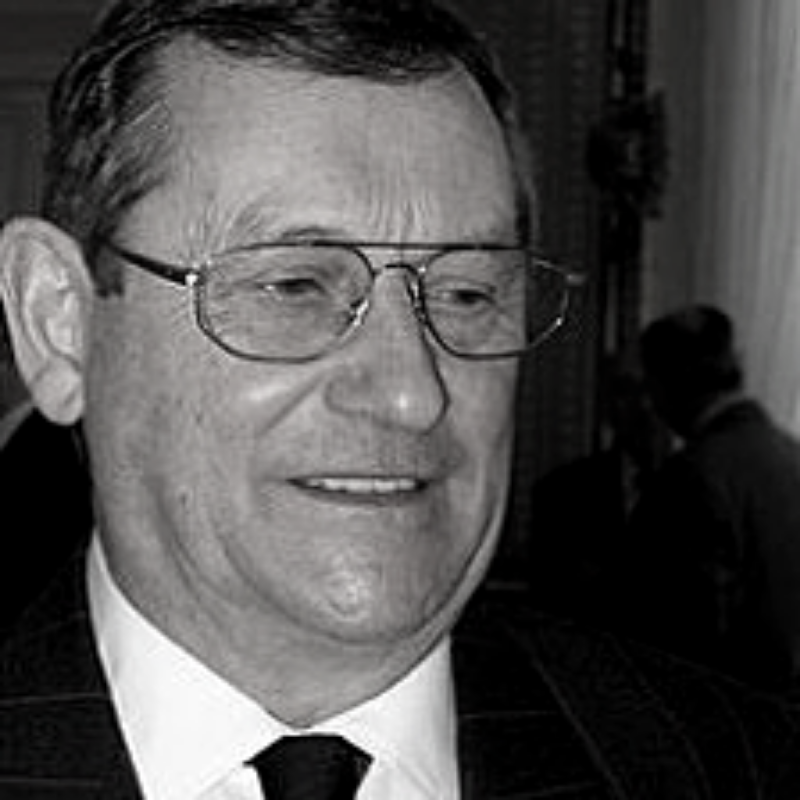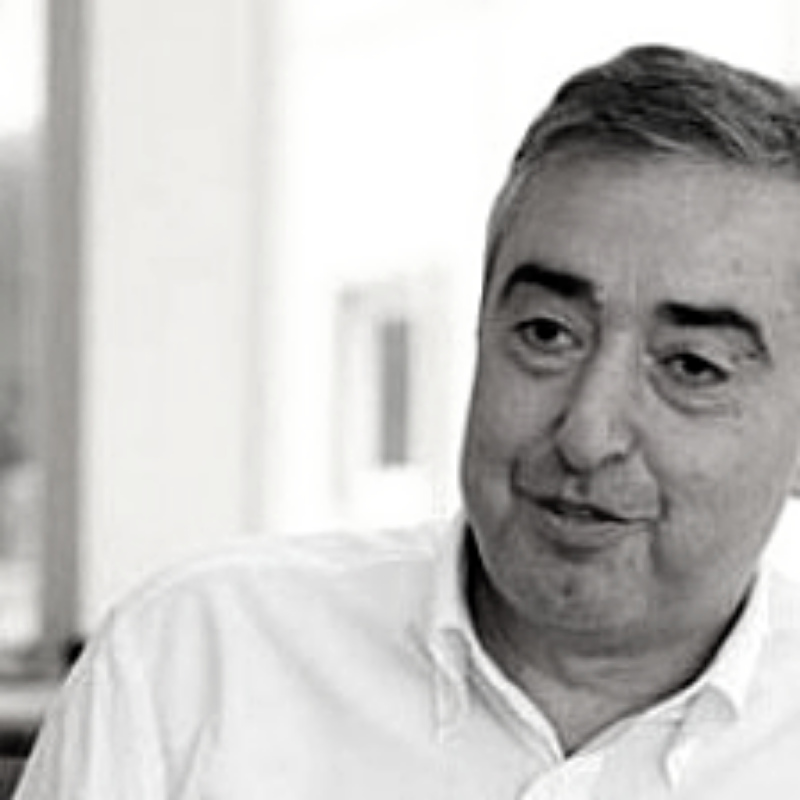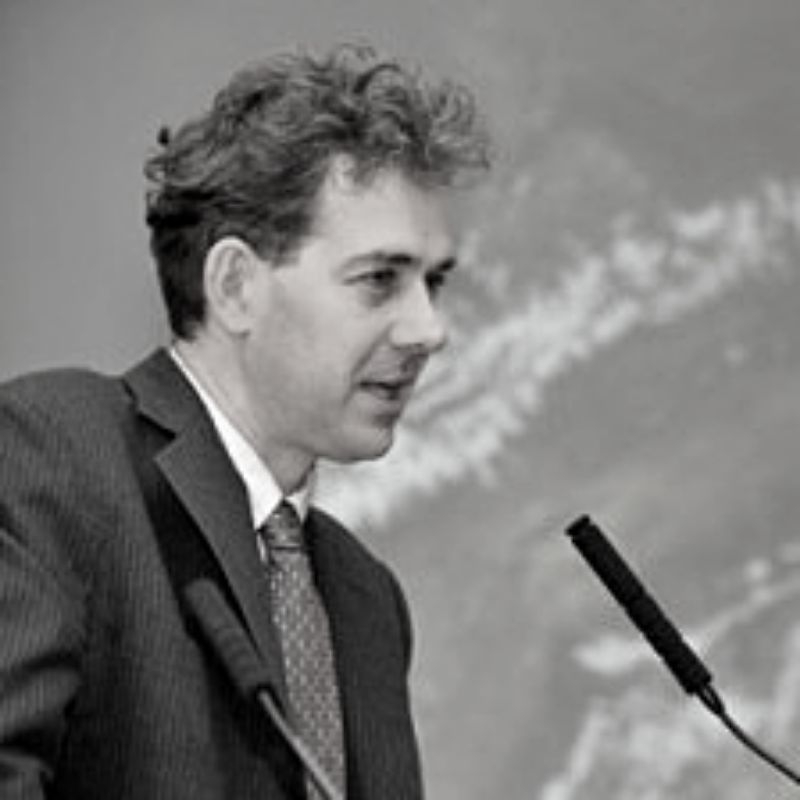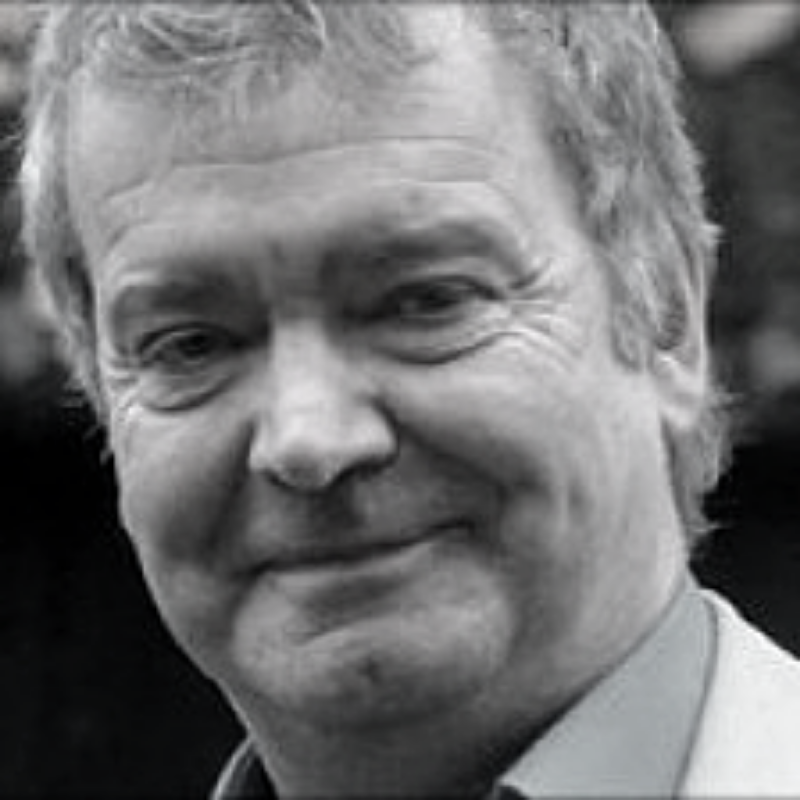
EUROCLIO Honorary Board

The EUROCLIO Honorary Board currently consists of 15 notable scholars and individuals who are prominent in public life and academic circles and thus give a powerful endorsement to EUROCLIO’s mission. EUROCLIO is most grateful to these distinguished individuals for their commitment to the Association’s mission and work.

altEUROCLIO is proud to announce that Prof. Yudhishthir Raj Isar became member of the EUROCLIO Honorary Board. We are honored to introduce to our members and wider network this renowned scholar whose work notably contributed to the development of consciousness of intercultural dialogue, understanding of history, heritage, cultural identity and diversity. The EUROCLIO Honorary Board currently consists of 19 notable scholars and individuals who are prominent in public life and academic circles and thus give a powerful endorsement to EUROCLIO’s mission. EUROCLIO is most grateful to this distinguished individual for his commitment to the Association’s mission and work.

Yudhisthir Raj Isar is Professor of Cultural Policy Studies at The American University of Paris. He is the co-editor of the Cultures and Globalization Series of publications. An independent cultural analyst, public speaker and writer. His latest publication is on Heritage, Memory and Identity. At UNESCO, Prof. Isar previously was Director of the Cultural Policies for Development Unit, Executive Secretary of the World Commission on Culture and Development, Director of the International Fund for the Promotion of Culture and Editor-in-Chief of the quarterly Museum. For further information about Prof. Isar here.

altYudhisthir Raj Isar (1948) is Professor of Cultural Policy Studies at The American University of Paris. He holds a master’s degree in sociology from the University of Paris, Sorbonne and a post-graduate diploma in social anthropology from Ecole des Hautes Etudes en Sciences Sociales, Paris. He is a social scientist with notable experience in the field of working with intercultural dialogue, understanding of history, heritage, cultural identity and diversity, and he has made significant contributions on the research in these areas.

The CV of Prof. Yudhisthir Raj Isar can be found below:


Judith Herrin: “I have been trying to think when it was that I realized that history was by far the most exciting and difficult subject that I wanted to study, but I cannot remember!” starts Prof. Herrin. She is sure nevertheless that it happened quite early in her life: she still remembers her distress, when she was about 11 years old, when being told that she would have to spend a whole year in a form where the main teacher was the history one, but a specially boring and old-fashioned one in her opinion as a little girl. “But I managed to survive that year!” continues Prof. Herrin. “The only rival to the history which I enjoyed so much was starting languages”: she evokes her “amusing Latin teachers” as well as an “amazing French teacher” as truly inspiring individuals who “sparked (her) enthusiasm for history.”
Prof. Herrin’s love story with history continued at University, where again her teachers at Newnham College, Cambridge University made a very strong impression on her, as it appears in the way she describes them: “marvelous women, role models who had achieved a lot in their own field in their own career and believed in education for girls”. At that time indeed, girls were normally taught by women, and the conditions were quite strict, which did not prevent Judith Herrin’s enthusiasm for history to grow: “Although we were locked in at midnight and not supposed to have boyfriends, she describes, it was a very stimulating atmosphere!”
The trigger to study the history of Byzantium, the field in which Prof. Herrin became a prominent expert, happened “quite by chance” in her final year at University. She followed a “fascinating” course on the expansion of medieval Europe taught by Philip Grierson: “He was a great expert on coins and more interested in the history of coins than anything else! (…) He talked about the empire in the East, and then he showed us the gold coins of Byzantium (… and explained how) they circulated in Scandinavia, across the Mediterranean, into north Africa …” Her curiosity aroused, Judith Herrin wanted to learn more about this empire, and her determination became even stronger after her teacher tried to discourage her: “Ooooh it’s all in Greek, you’ll never manage, you can’t study that. And it’s not taught here!”

Bodo von Borries: "For me there have been different paths to history at different times”, starts Prof. von Borries. His first access to history was when, as a child, he read adventure novels: the emotions, sensations, the imaginative power such books conceal worked for Bodo von Borries as a wonderful means to memorise a wealth of historical events, names, and other facts, and to make sense out of them. Such experience probably shared by many historians is as important as the necessary transformation into a more intellectual understanding of history which comes later. “Historical reflection has to begin with your own special access and personal motivation, need, desire, for history.” The discovery about Auschwitz and Hiroshima as a teenager in the 1950s was for Bodo von Borries the second and quite radical experience which led him to study history later on. He describes this discovery and the impact it had on him as follows: “(At that time), I did not know very much about (Auschwitz and Hiroshima); books about that were not (considered) to be adequate for young German educated boys by their parents. But I watched some terrible films. (They may have triggered) a small youth-depression of mine and a certain "existentialist" style of my self-presentation at that time.” Prof. Von Borries explains how before even reading his books he became acquainted with the ideas developed by the philosopher Günther Anders after World War II:  “living in an "end-time" of possible collective suicide of mankind demanded for consequences in life”. Since then, history became a mode of "responsibility" or "liability" for him.

Norman Davies: I was in my late 20s when I decided to become a professional historian and the inspiration was my knowledge of countries which few other people knew about.” Prof. Davies’ choice for history cannot be disconnected from other interests he developed from his childhood: “I was most interested in foreign countries as a school boy and as young man; I traveled a great deal and I was very keen on history but also geography and foreign languages.” Prof. Davies worked for five years as a language teacher, teaching French, before he moved into academia, using his skills in Polish and Russian to start a university career.

Hans Blom: As a very young child, at primary school, I was already quite fascinated by history, especially national history, in a very patriotic way!” Prof. Blom describes in a lively way how he liked to play the Dutch revolt with other children, and how he would rather be on the side of the Dutch revolting against the Spanish, the bad guys in his children games.

Tom Devine: As a teen, starts Prof. Devine, I became fascinated by military history”. With his young “appetite” for this aspect of history Tom Devine would devour both non-fiction and fictional works about the Napoleonic wars and the two World Wars of the 20th century. However, his choice for the profession of historian occurred only later, at University, where he initially chose to study history among other subjects within the broad-based humanities curriculum. What made him eventually specialise in history was the very unique intellectual stimulation he experienced with this highly complex and analytical subject. “What inspired me was the unique capacity (of history) for dealing with questions such as why things happened, explains Prof. Devine.


...and how would you analyse it today?
Judith Herrin:“There was a very striking contrast, starts Prof. Herrin, between teachers whose interest in history led them to approach problems, difficult subjects, periods of crisis and change which are still very important today, and those who just talked from the textbooks”  She can still remember for instance how one of her teachers who took his students on a tour to Italy made them understand a lot about historical developments by looking at works of medieval art and Renaissance portraits, and trying to identify the differences. But she can also remember another teacher “who taught the set book”, in his case mainly about the Tudor revolution, in a way she remembers as “unbelievably dry and dull”. And Prof. Herrin to conclude: “Of course, it was the more complex approach to the problems and conflicts of history that was the most interesting! (…) I think there is a lot to be done in school history through problem-solving”

Bodo von Borries: Before giving his answer Prof. von Borries warns us that it would be for him impossible to distinguish between childhood memories and the judgment he has on them now (by his historical investigation of history teaching and textbooks). He remembers about his history lessons a very arid approach: a huge amount of content, mainly abstract, hardly accompanied by pictures except some portraits of great men. And he goes on about the need for teachers to fill this gap: “(They) were (asked) to tell a lot of particular, colourful, adventurous stories additionally to keep the pupils motivated. Some of them did so successfully - including my own teachers -. Others simply tried to fix all important "facts" (i.e. names, dates, events, and terms), as the syllabi ordered it.”
Bodo von Borries is willing to share with us some vivid memories of his school time as a pupil, bringing to life what it was to be taught national history in Germany only few years after WWII. His experience shows that the widely spread idea that National Socialism and Hitler were avoided in German history teaching in the fifties was not always verified. He tells: “In higher secondary school, I had a very young and able teacher reading primary sources with us. We even had a famous pocket book which was printed in dozens of editions and millions of copies for decades (Walther Hofer [Ed.]: Der Nationalsozialismus; Frankfurt: Fischer). Of course, I know its logic of selection and exclusion and the short-comes of offers in this book now. Personally, I would choose other documents, but this is no reproach looking back after more than fifty years.” Another of his teachers made a strong impression on the young Bodo von Borries: he was “a rather young teacher - with one leg only, because he lost the other one as a soldier of sixteen years in the last days of the war. He taught me German literature (...). I have learnt as much history in his lessons, when reading e.g. Thomas Mann, Fjodor Dostojewsky, Wolfram von Eschenbach and Hans Jakob Christoffel von Grimmelshausen, as in the history lessons themselves. For me, this is a very important experience until today: History is much more than a subject matter at school. It is a general mode of understanding (the world) and living (...)”

Norman Davies: About his very first history lesson, dealing with the pyramids in Egypt, Prof. Davies always wondered: “Why on earth children are introduced to history by the most distant events which have nothing connected with their own lives or experience?” And this is why when he eventually became a history teacher himself he did exactly the opposite, and decided “to work backward instead of starting from the very beginning”. In general, Prof. Davies looks with a critical eye at the very “patchy” and “Anglo-centric” way he was taught history at school: “We didn’t learn much about foreign countries”. As a school student he lived thirty miles away from Wales, but never learnt anything about its history. He later found the same neglect for the history of Scotland, Wales and Ireland when he was at University, which was in his case the senior one of the country, Oxford. He remembers: “There was a huge indifference in England for the history of Scotland, Wales or Ireland!” Prof. Davies explains that for instance as a result of not teaching about the Act of Union between England and Scotland which founded the UK, “the assumption was, and for many people still is, that the United Kingdom is England; they call it England!”
Prof. Davies finally recognises: “I think I learned as much history outside the history lessons as with my history teachers!” From the history of Rome and Greece as part of his learning of Latin and Greek languages, to a series of lessons on the journey of saint Paul the apostle (“something that stuck in my mind”) in his religion classes, Norman Davies’ most vivid memories of school history seem indeed to lay outside the history classroom. His strongest influence was actually a geography teacher who because of his interest in French regional geography made students study from French textbooks, which combine history and geography. Prof. Davies became therefore equally interested in the two subjects: “I (won) a scholarship to Oxford in history and geography and I was going to be a geographer”. When on the first day of his first term at Oxford Norman Davies went to the geography school, he did not like it, and decided to become a student of history, and later a historian ... almost by accident!

Hans Blom: Traditionally history at secondary school was quite patriotic”, starts Prof. Blom, before reminding us that in the Netherlands the international dimension was somewhat more present than in many other countries. He explains that this difference can easily be attributed to the size of the country, and can be noticed in several other small European countries such as Belgium, Denmark, Norway or Switzerland. “In the late 50s when I was at secondary school, the school textbooks started already to change and to become more analytic”, remembers Prof. Blom. And when he was at University this trend was already taken to the next level: “it was a completely different piece of cake, and my attitudes and ideas about history changed completely in that period.” Since then, through his training as an academic historian, this analytical approach to history became the core of Prof. Blom’s interests and work.

Tom Devine: The kind of history I learnt at school was very narrative and fact-based.” Prof. Devine does not have very positive memories of his history lessons, and believes many from his generation would share this feeling. Because he found history boring, he actually opted for geography and gave up the study of history as soon as he was given the choice in high school.  “At that time geography as a school subject was more interesting and actually easier to comprehend.” explains Prof. Devine, stressing how people tend to become more interested in history as they grow older, in the way it happened for him. “It is difficult to convey the total complexity (of history), which is one of its attractions to me, at school level”, notices Prof. Devine.  However, he can affirm now that choosing geography at school prepared him in a way to later specialise in history at university. And he describes how having studied geography is to this day very helpful for him as a historian: “One of the things I tend to look at at the beginning of any of my research topics is what the physical environment of the society is like, the climate, the topography, etc. it is almost like what the Annales where there was a strong geographical input into historical studies


Judith Herrin:“The good thing about teaching history today is a much more student-generated approach to history which I think is very positive” starts Prof. Herrin. She describes: “It is much more directed towards students thinking about problems and finding their own conclusions, trying to get to the bottom of some issues.” Prof. Herrin is aware of the difficulty of such approach sometimes: “Some can’t do it and give up history; but it is still better I think to be able to chose topics, do research projects and read around the subject than to have one book that you have to learn and reproduce.”
Content wise, Prof. Herrin sees however serious difficulties in the way history is taught to students in her country, especially in the A level syllabus. “I think the real problem about history teaching at the moment in the UK, she says, is that this A level syllabus is terribly dominant and very restrictive.” Prof. Herrin mentions the results of a study realised by a university teacher among first year students of history (The strange death of history teaching (fully explained in seven easy-to-follow lessons), by Derek Matthews) : “Students were asked five questions of tremendously obvious common knowledge, many of which they could not answer correctly. (Who was the British general at Waterloo? Who was the reigning monarch when the Spanish Armada attacked Britain? What was Isambard Kingdom Brunel’s profession? Name one prime minister of Britain in the 19th century, and In what country was the Boer War of 1899-1902 fought?) Apart from the dictatorships, the students did not know a thing about the 20th century.” They failed to place in time and explain events as basic as the Battle of Britain or D-day. Prof. Herrin links such results to the problem she sees with an A-level curriculum focused on 20th century dictatorships: “Great pockets of ignorance exist with a firmer knowledge of Hitler and Stalin and the Holocaust.” But as Prof. Herrin explains about the example of the Holocaust: “(Students) shouldn’t just study what happened between 1933 and 1945; they should look for the consequences and the wider ramifications.” And she points out an obvious pitfall of such exclusive concentration: “If you only study Hitler and Stalin of course you get a very distorted image of great men in history!”

Bodo von Borries: Prof. von Borries deplores the inequality of treatment between history and other subjects such as German language, English, Natural Sciences, and Mathematics. “Social sciences and liberal arts are left out nearly completely from any discourse about education and evaluation.” In many German states school hours for history have been reduced or combined to politics and economy, which can be a good way to strengthen the link between study of the past and of the present, but unfortunately means too often saving time in the students’ schedules in favor of other subjects.
Out of school, history in Germany still benefits from a quite big public coverage, but what actually occurs is an “intensive concentration” on National-Socialism. Prof. von Borries analyses this trend and its consequences: “It seems that Hitler and National Socialism are something like a filter clouding over or even destroying (the long term memory of the German public)”. A lot of positive events and achievements of previous times are hardly brought to the attention of the population. Prof. von Borries gives a few examples of anniversaries which would have been worth celebrating widely: 200 years of the end of the Holy Roman Empire in 2006, 200 years of the end of the serfdom in Prussia in 2007, 100 years of high-school exams and university access for women in 2008, etc. In a sense, “German history follows a model of Fall and Redemption with Hitler 1933-1945 as the original sin and Basic Law/Western Orientation 1948/49 as the salvation”.

Norman Davies: Prof. Davies first points out some developments in terms of subject matter which contribute to diminish the Anglo-centric approach which was so pregnant when he was a student. He takes as an example the Holocaust, a widespread subject in English schools. But here again the approach proves to be somehow distortive: “the Holocaust is taught essentially as the biggest crime of our enemy, the 3rd Reich, essentially to say how virtuous we were” criticises Prof. Davies. The danger with this subject, he thinks, is also to eclipse other atrocities of the 20th century such as the crimes of Stalin, something which also deserves a widespread attention including at school level. "The Holocaust is a vital subject, explains Prof. Davies, but it cannot be taught in isolation from the history of other mass crimes."
Prof. Davies mentions then a characteristic feature of history education in England today, and which he describes as follows: “teachers have been convinced that school children should learn techniques of historical research by studying documents”, as their first access point to history. “The effect on the syllabus, says Prof. Davies, is that they only learn two or three little subjects”, what he calls also these “tiny little patches” such as for instance the origins of the First World War, or Tudors and Stuarts. For Prof Davies, renouncing to “teach (students) what happened century by century” does not make sense: “Research techniques should be developed when children already have some historical knowledge!”

Hans Blom: Prof. Blom’s own professional life provides a telling example of these different approaches to history which can be traced even through names. He explains how the chair he was appointed to at the University of Amsterdam was a chair in “Dutch History”, whereas its equivalent at the University of Leiden was called “History of the Fatherland”. The difference in the name is interesting, even if “in fact, recognises Prof. Blom, what the historians in Leiden do is analytical history, there is no difference anymore, but the background of the chair is different, the Leiden chair was a 19th century chair (...), my chair in Amsterdam was a new one

Tom Devine: Much more interesting and lively!” is the way Prof. Devine defines the approach to history teaching nowadays in comparison with what it was when he was at school. History became the subject within the social sciences which attracts to most students in Scottish secondary schools. At the same time, history suffers from the development of new school subjects such as computer studies, tells Prof. Devine, and as a consequence of what he calls a “packed curriculum”, there is very little time given over to social sciences such as history, which makes the task of the teacher very difficult. Prof. Devine readily goes into more details when talking about his subject, Scottish history. Stimulated by the evolution in the Scottish political life, with the arrival of the Scottish Parliament in 1999, and the national majority government, there has been “an explosion in Scottish identity”. “In my view, analyses Prof. Devine, Scottish history has been a promoter of that. (...) In the last 15 and especially 5 years, there has been more and more inclusion of the national past in the history curricula” whereas the subject had been until then marginalised. Prof. Devine notices however that the neglect of the national past at school level during all these years had the advantage of bringing to him very enthusiastic new students at University, who regarded Scottish history as something “exotic and exciting”! Similarly, the success of Scottish history in the media can be interpreted in Tom Devine’s view as the reaction of adults trying to “make up of the lack” of learning on the national past when they were at school. While looking very positively at this reappraisal of Scottish history, Prof. Devine reminds us of the need for a balanced approach: “I have been advising the Scottish government on the history curriculum in schools, and one of the points I have tried to stress to them is that when developing greater concentration on the national past we should not by any means neglect the international past.” By making sure that the pupils are aware of the broader context, the teacher enables them to fit the national experience into that background. Although traditionally in Scotland there has not been enough of the national focus, adopting it in a too exclusive way would be in a way like “throwing the baby out with the bath water” says Prof. Devine to illustrate his point.


Judith Herrin: “I think it is terribly important that children in school learn about historical moments which still have an impact on our world today” affirms Prof. Herrin. And as a medievalist, she goes further: “It is important to draw out the relevance of even ancient historical developments (…) If you think about the history of the Balkans, you cannot begin to understand it without going back to medieval times!” Prof. Herrin stresses for instance how interesting it can be for students to learn about how a lot of European cities in which people live today were founded in medieval times: “Fortified castles, city walls, cathedrals, town planning of the sort that we associate with the medieval period are still very present in Europe today”, she reminds us.
But there is also another aspect of history that Prof. Herrin identifies as useful for society nowadays, namely “drawing attention to particular aspects of history that show positive ways forward for people today”. And therefore, Prof. Herrin would like to see the emphasis on periods of great intolerance (see the previous question about the UK A level syllabus and its focus on 20th century dictatorships) “balanced by more emphasis on moments in history where we see a greater degree of tolerance, of acceptance of differences.” As she explains, students should understand that “political change brings different fortunes to bear, but societies aren’t necessarily prone to dictatorships of an intolerant kind.”

Bodo von Borries: I would pose the question the other way round. Is it possible that teaching and learning history does not play a specific role in society?” In his answer to this provocative reversal of the question, Prof. von Borries actually reintroduces the role of school history in society, because it is a fact that historical narratives are for societies an unavoidable and omnipresent material to build cohesive collective identities. Most of this enterprise happens out of the schools in a very uncritical and unreflective way, therefore school history is actually “one of the very rare chances to carefully balance historical narratives not against (the construction of cohesive collective identities), but against making them absolute, against their arrogant claim of superiority at the costs of others. The “learning of history for today” should be approach in a complex way, using a comprehensive theoretical apparatus. Prof. von Borries introduces us in a few enlightening words to the different meanings of sense-making for history as defined by the German historian Jörn Rüsen. There is a traditional sense making, at work when “an event, an institution, a decision of a special moment is set up as obligatory, compulsory, liable for all times, like a monument of bronze”. There is an exemplary sense-making, which implies that “from old cases of the past you may learn the general rule or course of events for (yourself) for future cases”. There is a critical sense-making which is “an act of resistance, of protest, of rejection against an established tradition or a recognized example” and which is at the origin of all important revolutions. And eventually, there is a genetic sense-making which addresses duration in change, continuity despite revolutionary innovation, “because nevertheless, past, present and future are parts of an identical ongoing process and have to be integrated - if not harmonized - in biographies.”
After offering this conceptual overview, Prof. von Borries stops and asks: “This sounds too complicated for a 10 grade history classroom? I cannot accept that. (...) We have to explain what we do. History cannot remain a black box for the learners. That is the correct sense of the new slogan "historical competences".

Norman Davies: “Children ought to be taught that there is a historical dimension to everything: astronomy, politics, technology, everything under the sun!” starts Prof. Davies. For him, a way to acknowledge truly the role of history in society would be to question this widespread idea of “history teaching as something from lessons in history”, corresponding to a certain amount of hours in the weekly timetable of the pupil. For instance, tells Prof. Davies, “The math teacher can teach something about the history of mathematics! Why were Isaac Newton or Descartes famous mathematicians, among other things?” He even suggests an innovative approach: the history teacher, instead of having to concentrate on the two or three hours he has in the week, would be able to exchange place with his colleagues to bring this historical dimension to all what is taught at school.

Hans Blom: There is a big difference, I should say, between history as a discipline at University and history taught at school.” starts Prof. Blom, before developing on this fundamental distinction. In the first case it is a science, in principle only devoted to “reconstruction and analysis, understanding what happened”. In the second case, it is the result of “a political decision” implying that a population should learn history. Here, continues Prof. Blom, a moral and political dimension is introduced: “it is about values in society, about the kind of society we would like to have”. At University history tries to be as value-free as possible, whereas at school “there is a deliberate attempt to integrate people ... And I agree with that!” concludes Prof. Blom, whose concern is however that one should be aware of the difference between the two types of history.

Tom Devine: I would like history to be regarded as a compulsory subject at least up to the age of 16” starts Prof. Devine. History as the memory of a society is fundamental: “You need an awareness of the past in order to know what you are in the present”. Tom Devine believes this is all the more true in the period of transformation and change our societies are going through: “We need anchors coming from the past in order to understand and appreciate the scale of these changes as opposed to the present.” In this context, “training the intellect in a critical way”, developing the ability “to assess evidence and to make convincing conclusions” is crucial, and there lies the unique contribution of school history: “Other subjects can do that, recognises Prof. Devine, but (...) very few taught at school level can convey that importance of how to move from assertion, understood as generalisations which are not effectively backed up by evidence, to argument.


...Is history education to be assimilated to education to democracy?
Judith Herrin: “It is good to remember that there have been times in history when Arabs, Christians, Jews, all people of the Book, managed to live in proximity and were not fighting all the time.” tells Prof. Herrin, thus stressing the great opportunities that the study of history represents for intercultural learning. “In Medieval Spain, she explains, lots of Christians and Jews lived in very close proximity, not always with very good relations but with toleration (…).” Similarly in the Byzantine Empire, she continues, “Jewish communities in most of the cities were not living in ghettos, were not secluded, but appreciated as craftsmen, doctors, etc. They were understood as belonging to a different church but not despised and usually not humiliated on a regular basis.” As a last example, Judith Herrin mentions how “economic and commercial links frequently overcome interfaith problems” between Arabic traders going to the Byzantine empire and Christians going to trade in Arab countries.
Prof. Herrin also says how important it is nowadays that history teachers point out “the background to texts revered as very holy or very important”. “The context in which documents are written needs also to be studied”, she says, taking the example of the life and ideas of George Washington and his companions of the American Declaration of Independence, and all the archeological work showing in what context the Bible has been written down. Prof. Herrin thinks the same should be done for the Koran in Muslim countries, although she realises it is of course a very difficult issue: “A lot of Muslim children throughout the world are taught to believe that this is the word of God and that Mohammad spoke these words under divine inspiration (…) but even in these circumstances I think history teachers can point to the emergence of the Arab tribes as a force in the 7th century AD, and how this has impacted the rest of world history.”  For Prof. Herrin the intention behind such an approach has to be clear: “… Not to shake their Muslim faith, as a way to criticise religion, but to show that there is a historical background to these developments.” This background is, as Prof. Herrin reminds us, a necessary key to a real understanding of how Islam developed: “Even if (students) believe in the truth of the word of Mohammad, the prophet of God, they can begin to see how that was used by the leaders who followed him, by the kings and by military leaders who spread it far and wide around the world and made it a world religion … because that didn’t happen just by the word of God!” she concludes. “Of course it is a difficult topic to teach in school, adds Prof. Herrin. But if it is related to other works of scripture which are considered holy, you can see that there are contexts for all these works, and as we learn about the context, we are not diminishing our appreciation of the importance of these books.”

Bodo von Borries: Whoever wants cohesion via history has to seek for inter-cultural learning as well”, answers Prof. von Borries, thus linking two elements of the question, because “Often the coherence of societies is improved at the cost of “others”: outsider groups, ethnic or religious minorities or unpopular neighbouring nations”.  “The world is not uniform and histories are necessarily heterogeneous, not only in immigration societies. (...) This is not only a question of so-called "races" and colonial hardships or of neighbouring nation-states with war-experience. "Gender" is at stake as well. (...) History has to help for reconciliation as much as to coherence”. “Today, the character of histories cannot be as simple - and producing "coherence" as easily - as in the past. Who says coherence has to say diversity as well, or risks violence.

Norman Davies: I had quite a lot to do with communist-ruled countries: the Communists were extremely keen on using history lessons for political purposes!” For Prof. Davies, it might be quite dangerous to assign too narrow purposes to the teaching of history, no matter what these purposes are, and “history should not be in the service of democracy but of everything”. Indirectly, what Prof. Davies calls the “history teaching of the open society” does contribute to foster democracy, through for instance teaching about criminal episodes in the history of undemocratic regimes.

Hans Blom: I think that we should try at least not to teach in secondary schools things which are according to academic history not true!” This is for Prof. Blom where the main link between history as an academic discipline and history as a school subject is, and should be preserved and reinforced. The role of history in society is intimately connected with this difference in approaches to history: “I think at University judgements should be refrained from as much as possible (...); but at school implicitly the judgement is the starting point” says Prof. Blom, and this judgement refers to the fact that a certain idea of how a society should function is conveyed to the pupils. “And of course, he continues, there can be a political struggle about that. It is not by accident that dictatorships try at an early stage to have a big grasp on history teaching”, something democracies also like to have in their own way, Prof. Blom adds immediately.

Tom Devine: If history is taught with intellectual honesty and consideration for the evidence, then the appropriate values will come to the surface anyway.” thinks Prof. Devine. In his opinion indeed, having to convey political messages even democratic one, is not a very attractive route to take for history teachers, especially if the injunction is coming from the governmental authorities.


Judith Herrin: “I think there is a need to use official commemorations to draw the attention to other aspects of (the events commemorated).” starts Prof. Herrin, taking the example of the UK, where the emphasis in terms of what history is brought to the attention of the public is rather strongly on the 1st and 2nd World Wars. And she explains what she means by these other aspects: “There is a very great amount of poetic writing about the war, and the war poets are much studied by the students of literature, but the students of history probably don’t read them. There is a lot of wonderful music inspired by the war poets, and there are of course the war requiems (…). These are ways of teaching about history from a slightly different angle.”

Bodo von Borries: History lessons should explicitly discuss and reflect public history more often” affirms Prof. von Borries. He gives as examples the analysis of parliamentary debates, memorial dates, monuments, museums, mass media. For him, this is even truer when public history creates controversies in the society, as a chance for school students to exert their judgement. When there is a possibility that the official interpretation of history is biased and contributes to develop prejudices in the public opinion, school history even has “the urgent purpose of de-constructing (that means examining, not destroying) it. In some cases (belonging to the past) like famous historical monuments or movies this is not really very difficult, because the development itself has made the logic and function of the outdated version obvious. (...)In recent or actual cases you need courage and wit, critical categories and methodical tools as well.

Norman Davies: Children need to understand why there is a monument to Charles de Gaulle, or to Churchill, but at the same time they need to ask themselves what things are not commemorated and why not” reminds Prof. Davies. As he explains, academics as well as school teachers have to be selective because history is too big to try and learn about everything, but this characteristic of history has to be explained at an early stage to the children. Prof. Davies quotes as a telling example the visit of Queen Elisabeth to Ireland, “the first monarch in a hundred years, can you imagine?” And he mentions the Irish soldiers who fought in the British army in the First World War and have not been remembered at all until recently.  Prof. Davies sees in the fact that lately memorials to these soldiers have been erected in Dublin “a good example of public history, something everybody saw: the British and the Irish governments have finally, after nearly a hundred years, introduced some balance to that memory

Hans Blom: There is a lot of mythology in the public debate, and the role of history could be first to try to get the facts straight, for the quality of the debate”, says Prof. Blom, stressing that this is the most urgent task of the profession, before bringing in scholarly analysis and interpretation. The idea that “you can look at the past in different ways”, depending on what are your values, and that it is not immediately clear what the true discourse is, is in Prof. Blom’s opinion a basic thing to transmit to the wide public at school level already. He concludes: bringing “some kind of moderation in political fights” by teaching how to try and understand the other could be an important role for history. “Of course, specifies Prof. Blom, that doesn’t mean that we should agree about everything (...), but rather having an eye on the reason why people think what they think and do what they do.

Tom Devine: The better teacher would be the one able to stand back from the popular celebration and explain what historical reality is behind” suggests Prof. Devine. Commemorations and other aspects of “official history” are important when studying the national past, however the teaching approach “should not be celebratory but critical”, and therefore should explain to the pupils why is for instance this day considered important. Prof. Devine takes for a moment the success of the film Braveheart as a particularly telling case of history as something playing a role in the public area. He imagines what kind of approach he would take to talk about the movie with his students. “The film has had an enormous impact worldwide, and it is almost entirely mythological. (...) If a teacher deals with it in the classroom, he would have to explain to the pupils first: it is a piece of entertainment, it is not meant to be a documentary. There is hardly any relation between what we know about the history of that period and the film.” Then, the teacher would have to make his or her students think why given this has this film stimulated such interest, to the point of event boosting tourism in Scotland? Eventually, the teacher would also have to tackle another aspect of the popular success of the movie, which is the impact of such powerful films on the political agenda: here again Braveheart is an interesting case, stresses Prof. Devine: “(the film) itself is regarded as having had a significant effect on the popularity of the Scottish National Party.


...and lack of understanding of young people about major trends and events in history, whereas several other indicators signal an interest for the topic among the population?
Judith Herrin: “I must confess I am quite an enthusiast of historical movies (…): I thought Gladiator was excellent and told all my students to go and see it!” reckons Prof. Herrin with a laugh. And she goes on about what she liked in the movie: “I thought the reconstruction of the Coliseum was very accurate, and the opening war scene quite effective.” Prof. Herrin is convinced that “A lot of historical movies are very good fun and quite informative”: “I am sure, she says, that viewing historical movies and reading historical novels is a good way to get into different aspects of history!”. For instance, she continues, “students may find it very dull to read Caesar’s Wars, but it is absolutely terrific to go to a movie like Ben Hur or Troy and see how people were fighting in ancient times.” The same goes for visiting castles and battle fields, quite a popular activity in England: Judith Herrin takes the example of the onsite reconstruction of the battle of Hastings (1066), and provides us with a vivid account of what one can experience there: “You can actually go around and imagine how the Normans were attacking and how the Saxons were defending, she described, and how the Normans were nearly repelled. (…) It is very well done! There are a lot of notices saying for instance: here the Normans were pushed up … and you see the hill!”  
Needless to say, Judith Herrin’s enthusiasm for such historical reconstructions is inseparable from the conviction that they should be followed up and accompanied by more “reasoned” and “analytical” accounts of what was going on at that time. “It should go together”, so that movies, novels and historical sites “enhance historical knowledge”, and here Prof. Herrin recalls the responsibility of the educational system.

Bodo von Borries: I don't believe that this is a contradiction.” starts Prof. von Borries. He reminds us that “History has always been the history about elites for elites and in the interest of elites”, no matter how you call these elites. Hence, the kind of knowledge about history shared by the majority has always been very “rudimentary, (as) already found in the first empirical studies around 1900 - and ever since.”
The success of heritage sites nowadays, comments Prof. von Borries, lies in the fact that “they seem authentic (although they often are heavily restored by the art of romantic historicism in the 19th century or (are) merely invented tradition); they are said to be real, aesthetic, illustrative and three-dimensional. You can grasp them in the double sense of using your hands and your eyes for understanding and storing them. At least, you may have the illusion of grasping the past itself.” Because again, stresses Prof. von Borries, a process of alienation is at work there: many of these historical sites “could only be suggestively identified to some basic myths and symbols” belonging to the history of a few (the elites). In the past two centuries, such signs were mainly related to the nation and the state as the key notions, but we should not forget this has not always been the case.

Norman Davies: "One is the cause of the other!” Prof. Davies reminds us that in England history is no longer a compulsory subject at school, with the consequence that most children acquire no knowledge of history at all, or a very poor and selective knowledge of it. “What happens, says Prof. Davies, is that when they leave school they realize that something important is missing”. As an author, he himself can testify that “there is a great hunger for history”, which he sees taking various forms: genealogy is very popular, especially since the Internet offers new searching opportunities; archeology, which combines the study of the past with outdoor activity, attracts a lot of students in further education; and of course, historical documentaries on television are very successful. About the last example and in the English case, Prof. Davies has some criticisms: although these productions can be very well made, they usually present very traditional English history, such as stories of kings and queens, in a way which reminds Prof. Davies of the way his mother learnt history at school (“She could recite all the kings and queens of England from 1066!”). For him, the reasons for the success of this often regressive and highly selective approach to history can be found in the downgrading and loss of prestige that school history suffered from in the recent past.

Hans Blom: People are more or less naturally inclined to have an interest in the past”, starts Prof. Blom; however “their representations of the past come not mainly from history textbooks or articles and books by historians, but from family, newspapers, movies etc.” Consequently, explains Prof. Blom., the perception of the past is closely associated for a majority of people with sensationalism. What these various media indeed try to do is “to move people by telling stories of heroes and villains” In Prof. Blom’s opinion, this phenomenon calls for an increased role of history education as a way to learn about processes of reconstruction of facts from the past:  “I would like to have more history in schools than we have now, because we have to counter-balance all those forms of uncontrolled images of the past.

Tom Devine: Knowing where you come from is a deep-seated human desire.” Prof. Devine found out, while doing a research for his last book on the global diaspora of the Scots that “families’ history is second only to pornography as the most popular area on the Internet.” So if this phenomenon can seem paradoxical when compared to history as a discipline, the reason has to be found in the way history is taught, argues Prof. Devine. “Certainly in some countries (I cannot talk for the whole of Europe) history is not taught in a structured way.” Often, topics are addressed successively without any connection between them. For instance at primary school in Scotland, “you get a couple of lessons on the Egyptians, and a few weeks later you may move to the history of highland migration. History does require the student to be exposed over a lengthy period to change over time” But of course, stresses Prof. Devine, to create an understanding of how a society evolves and what historical time means, you need … more time! The task of a history teacher is made very problematic because the very few hours allocated to history at school. To face this issue, a different approach is needed, and Prof. Devine has his idea on what would work better and would move far too eclectic curricula into something much more structured. He expressed such idea when advising the Scottish government on the school history curricula: “My advice was to go for the 12 most important key developments or forces which achieved the modern nation, from the beginnings of the developments of the nation in the 11th-12th century through Renaissance, Reformation, Enlightenment, into the period of Industrialization and then in the 20th century”. Instead of concentrating on a given period or issue, followed by another one which has nothing to do with it, this approach, concludes Prof. Devine, is the best way to always keep in mind the broader context, the international background.


... in teaching history in many different countries in Europe, in your opinion, could this experience inspire and enrich other parts of the world, and how?
Judith Herrin: “EUROCLIO has a real role in giving examples and making available material which shows how Europe has influenced other areas in the world and has been influenced by them in return.” thinks Prof. Herrin.  “We need to (understand), she considers, why Europe has come to such prominence in the world through building a union of many nations (…) and we need to see this in relation with these other areas which are part of global history”. Here Prof. Herrin mentions another organisation, the World History Association, which is reaching out to those countries such as China and India, and making links.
Working on Byzantium, whose capital Constantinople is now Istanbul, a great city in Turkey, Prof. Herrin sees how fruitful it is for Europe to create and renew exchanges beyond its borders, as happened a few years ago when Turkey decided to “knock at the door” of the EU.  The constitutional changes and the economical growth Turkey experienced in the last years are certainly a consequence of such initiative, thinks Prof. Herrin. For Turkey, turning to Europe meant however not only opportunities but also challenges, as she explains: “When I go to Turkey, I see all these Byzantine Christian monuments which the Turks aren’t quite sure how to handle. (…) It is quite hard for them to come to terms with a part of their history in which they had no role.” Prof. Herrin is very engaged to contribute to change such perception when she encounters it in Turkey: “I try very hard to persuade my Turkish colleagues that it is very important for them to embrace their entire history and make clear to young people living in Turkey today that they can claim it as their legacy. They did not live through it they did not share it but it is there and they have to look after it.” And she continues: “I campaign vigorously to include Turks in discussions about Byzantium and try to persuade them that this is an important way forward for them.”

Bodo von Borries: As a possibly inspiring and enriching experience, Prof. von Borries highlights the work that can be done with history in post-conflict societies in order to accompany the “political de-escalation” and as a step towards reconciliation of societ(ies). He mentions the example of EUROCLIO but also the work of the German historian Georg Eckert who set up bi-national history textbooks commissions after World War II and created a textbooks institute. Prof. Von Borries expresses however a certain reservation: “Common history textbooks for former enemies”, he says, “are a possibility, but not at all the ideal solution.”  Indeed, in societies which are still deeply divided, “a common version (of history) may be more an obstacle to learning than a chance.” But in such cases also, solutions exist, which present contrasting versions and explain their functioning and logic. “In the Israeli-Palestinian example , two parallel national texts are printed which have to be compared and worked through. (...) The middle column of the book is simply blank and white. That means, every class, every individual has to produce, to write, and to internalize it him- and herself - in a responsible way by communicating and arguing with the other side. Unfortunately, both governments, that of Israel and that of Palestine, don't like that structure at all. But it is an investment for a better time...”

Norman Davies: I think Europeans need to make sure that non-Europeans know something about European history” warns Prof. Davies “otherwise they will learn what they want to learn about it”. And, as he explains, many different perceptions of European history probably exist in other parts of the world, and possibly mainly negative ones. Prof. Davies is in the last years becoming especially interested in “the teaching of European history outside Europe”, after he has been devoting a great part of his career to broaden within Europe the perception of what is European history. “I spent a lot of efforts campaigning to include Eastern Europe in people’s idea of European history”, tells Prof. Davies. As he remembers from the years he was a student, European history used to mean for the majority some big countries in Western Europe, “sometimes Russia”, but actually “most of Europe was not present at all!” For instance, nowhere in the history textbooks would students learn about the kingdoms of Poland or Lithuania, which used to be some of the biggest states in Europe, bigger than Russia even.

Hans Blom: Every opportunity to convince somebody that it is worthwhile to have a look at the past, not only of yourself but also of others, should be taken! This is in a way how Prof. Blom would answer this question. “(History educators) have to try to bridge the analytical approach of the academic historians on one hand and the basic needs of society on the other hand”, he reminds us, and in this task any pupil, an adult-to-be, who can be reached should be, as a beneficial contribution to society. 

Tom Devine: Prof. Devine’s own writing illustrates his concern for a global approach to history: “In my most recent books, I have been placing Scotland not only in the British context but in the broader context. My next book which will be published in August will be called “To the ends of the earth, Scotland’s global diaspora 1750-2010”. Indeed, over this period of time, Scots have been emigrating and settling to other European countries but also overseas to America and Asia. In Tom Devine’s opinion, emigration studies, or what he calls also the study of “international mobility”, is a very effective and dynamic way to connect thematically between the different geographical levels: “to figure the links between the own country, the European heritage and the world”. It allows to “extend the national picture” by studying why do people leave the “homelands”, how do they assimilate in the new lands, the “hostlands” in Prof. Devine’s words, and what role do they have in the development of these “hostlands”.


...aiming at “constructing common historical knowledge about Europe without losing a plurality of perspectives and inter- and intrastate diversity”

Judith Herrin: “Here my own experience of teaching Byzantium is very relevant, tells Prof. Herrin, not only about Turkey but also the Balkans” starts Prof. Herrin. “When you look below the present 21st century structures, she explains, what you find is very ancient traditions that go back to the Roman and Byzantine and Ottoman periods.” And Prof. Herrin stresses how important it is to explain to students that “these long traditions have encouraged specific types of developments”. She takes the example of churches and mosques which have caused killings and fights during the 1990s wars because they represent the other. People ought to know, Prof. Herrin insists, “how they came about, who put them up, what they represented for people at the time when they were constructed rather than today”. And she suggests an interesting exercise, in line with the way Historiana tries to bring together different perspectives on specific historical moments: “It would be very useful to have an inter-Balkan discussion among people from various areas”, says Prof. Herrin, and ask them “how far back they can trace” specific developments and characteristics of the place where they live. “Take a tiny area of Kosovo, starts to imagine Prof. Herrin, a small part of Slovenia, a single port in Croatia!” and make people think, as she continues: “how has it become what it is today, and at what times has it been in relation with other ports, for instance?” Prof. Herrin concludes, coming back to the historical thinking behind such an idea: “There are ways of interpreting which are not divisive but which are symbiotic, and which show how intercultural relations have always existed, how there has always been conflict but it has been resolved at certain times.”

Norman Davies: Most people in spite of everything think of history as a national subject”, reminds Prof. Davies, reacting on the thematic structure of Historiana. He imagines the reaction of “some of (his) Polish friends” for instance, when discovering the website: “The first thing they would do is to see if there is anything here about Polish history!” As Prof. Davies himself experienced recently with his book Vanished Kingdoms, readers tend to look for something which is connected to their country.  For this reason, Prof. Davies’ advice would be to introduce “a greater emphasis on national histories” on a website such as Historiana. Using the limitless flexibility of a website, Historiana could provide the visitors with something about all histories of the (roughly) 40 European countries, giving them the opportunity to jump from one of them, usually their own, to another. Because, as he asks, “What is Europe if it is not a collection of national histories

Tom Devine: Deepening the “twofold approach” would be Prof. Devine’s encouraging comment about Historiana’s development. By this he means presenting the global and international elements and the impact on them of the national experience, and vice-versa. Tom Devine suggests taking the British experience and relating it to the European level: so-called British history has for long been another name for English history, until it became a truly four-nation history. And nowadays, explains Prof. Devine, “there is a much more nuanced awareness developing of the fact that the four nations share a lot of things, that there is a great commonality, not least in language, but that there are distinctive civil and cultural structures.” Why not, indeed, using the British experience as “a kind of template” to foster similar processes in Europe?


Judith Herrin: “Rather selfishly, my personal message would be a plea to bear in mind the ancient background of European civilization!”

Bodo von Borries: Don’t stick to the history (...) which your government perhaps believes to be the most important of the world, like the own national independence movement or the French Revolution (...) There is a history of everyday-life, of emotions and sentiments, of mobility, travels and migration, of gender roles and sexual life as well, not one of war battles and peace treaties only.” This resolute message shows how fully and deeply committed Prof. von Borries is to promote and improve history education.
In his final words, in line with all what he has said before, he insists again on the role for each individual of a history understood as “the complex and flexible relation of interpretation of the past, perception of the present and expectation for the future.” As such, history can be a source of orientation for life in the most personal sense:  “If you teach thirty kids at the same time (and even with the same material and method), they will not have a common learning (experience), but thirty very different ones.” As a result, the mission of the teacher is all the most challenging and fascinating: “It is a difficult job to get an impression of everyone's needs and processes in the classroom (to establish a diagnosis) and to assist everyone's learning progression individually (to create a stimulation).

Norman Davies: Teach children the passion for the subject and everything else will then fall into place!” encourages Prof. Davies, and he continues: “Even more important than historical knowledge is the enthusiasm for history (…) History teachers can’t tell pupils everything about history, but once a child is seriously interested in history, he or she will read books, go to the library, search the Internet, etc.” A teacher should prevent students to see history as a dead subject, try to show them that it is actually fascinating and “enables you to explore absolutely everything!” Therefore, asks Prof. Davies, “Whatever you do, don’t be boring”, because “History has to be alive!”

Hans Blom: Go for it, it is worthwhile, and it can be fun as well!

Tom Devine: Prof. Devine asks history teachers to show “confidence”: the confidence to know that their discipline is of fundamental importance in the shaping of young minds. Talking as an educator rather than an historian here, he wants to remind us that “history is not simply a marginal subject at the end of a curriculum, but a subject which ought to be at the centre of a good education for young people.

EUROCLIO is very sad to announce the death of its Honorary Board Member Dr. Max van der Stoel. Max van der Stoel was a former Minister of Foreign Affairs of The Netherlands and the first OSCE High Commissioner on National Minorities. He died on 23 April 2011 at the age of 86. This great man promoted through all his life and work as a high level diplomat values of democracy and inclusiveness and thus contributed to build more peaceful societies in Europe and beyond. EUROCLIO was very proud and honored to have the name of such an eminent personality attached to the Association, and hopes his example will keep inspiring many in the future. As OSCE High Commissioner on National Minorities,  Max van der Stoel dedicated himself to the protection of human rights and  shaped the conflict prevention mandate of the institution. The current work of the OSCE towards National Minorities, through which Max van der Stoel's legacy lives on,  says current High Commissioner Knut Vollebaek, is in many aspects close to the EUROCLIO inclusive approach to national histories.

Judith Herrin studied history at the Universities of Cambridge and Birmingham, receiving her doctorate from the latter; she has also worked in Athens, Paris and Munich, and held the post of Stanley J. Seeger Professor in Byzantine History, Princeton University before taking up her appointment as the second Professor of Late Antique analtd Byzantine Studies at King's. Upon her retirement in 2008 she became a Research Fellow in the Department.  She is best known for her books, The Formation of Christendom (London 1989),  Women in Purple (London, 2000), and Byzantium: the Surprising Life of a Medieval Empire (London, 2007); she has also published widely on Byzantine archaeology and other fields. Her current research interests include women in Byzantium and Byzantium in relation to Islam and the West. In 2002 she was awarded the Golden Cross of Honour by the President of the Hellenic Republic of Greece.

Prof. Dr. Ekmeleddin İhsanoğlu (born 26 December 1943) is a Turkish science historian and currently the Secretary-General of the Organisation of the Islamic Conference (OIC), the second largest public international organisation after the United Nations. İhsanoğlu was born in Cairo, Egypt, where he later studied science at the Ain Shams University, receiving his BSc in 1966. He obtained his MSc in 1970 from the same university and his PhD from the Faculty of Science at the Ankara University in 1974. He was founder and chairman of the Department of History of Science at the Faculty of Letters of Istanbul University from 1984 to 2000. His special interest focuses on culture and scholarship in the Islamic world. He was lecturer and visiting professor at various universities like University of Exeter, United Kingdom (1975-1977), Ankara University, Faculty of Science (1970-1980), Inönü University, Malatya (1978-1980), Ludwig Maximilians University of Munich, Germany (2003).

 Vaira Vīķe-Freiberga  (Riga, Latvia 1937) was the first female President of Latvia. During the Soviet occupation, in 1944, Vīķe escaped to Germany with her family. After that they moved to French Morocco she went on to attend Collège de jeunes filles de Mers-Sultan in Casablanca. In 1954 her family moved to Toronto, Canada there she completed her study and received her High School diploma. In 1958 she was accepted as a student at the University of Toronto. She first achieved a BA in Psychology in 1958 and followed it with an MA in 1960. In late 1960, Vīķe became a clinical psychologist at the Toronto Psychiatric Hospital. In 1965, she took the post of Professor of Psychology at the University of Montreal. In June 1998, she was made a Professor Emerita and took this opportunity to return to Latvia, where she received the offer of the Directorship of the Latvian Institute. One year later  she became President of Latvia and reelected in 2003. She has been succeeded as president by Valdis Zatlers, who was elected President of Latvia in May 2007. In that same year she was appointed vice-president of the Reflection Group on the long-term future of the European Union.
 Wim Kok (Bergambacht, The Netherlands 1938) studied at the Nyenrode Business School in the Netherlands and he started his career at the Socialist Trade Union NVV where he was chairman from 1973 until 1982. Between 1976 and 1986, he chaired the FNV, the Federation of the NVV and the Catholic NKV, which he had overseen. In 1986, he became leader of the Social Democratic Party PvdA. From 1989 until 1994 he was Deputy Prime Minister and Minister of Finance in a cabinet with the Christian Democratic CDA. In 1994, he became Prime Minister of The Netherlands and served this role until 2002. Since 2002 he is the Commissioner of the International Committee on Missing Persons.
 Diogo Sassetti Ramada Curto (Lisbon, 1959) is the Vasco da Gama Professor of History at the European University Institute and a specialist in the history of European expansion and colonialism. He studied History at the New University of Lisbon; he has been a Lecturer, Reader, and Professor at New University of Lisbon, and a Visiting Professor at Yale and Brown Universities.
 Max van der Stoel (Voorschoten, The Netherlands 1924) studied Law at the Rijksuniversiteit Leiden. From 1953 to 1958 he worked for the Wiardi Beckmanstichting, the scientific bureau of the Partij van de Arbeid (PvdA) and, in 1963, he become international secretary for the PvdA. From 1973 to 1977 and 1981 to 1982 he served as the Dutch Minister of Foreign Affairs. He was appointed as the first High Commissioner on National Minorities of the Organization for Security and Co-operation in Europe in December 1992 and took up his functions in January 1993 and remained in office until 2001. From 2001 until 2003 he was part time professor of International and European Law at the Catholic University of Tilburg. Since 2001 he has been active as special advisor of EU Foreign Policy coordinator Javier Solana.
 Jože Pirjevec (Trieste, Italy 1940) has graduated in modern history from the University of Trieste, continued his studies at the “Scuola Normale Superiore” in Pisa and at the Diplomatic Academy in Vienna and obtained his PhD in Historical Sciences from the Faculty of Arts in Ljubljana. As a full professor of History of Slavic nations, he has lectured at the Universities of Pisa, Padua and Trieste and teaches at the Faculty of Humanities of the University of Primorska. Currently, he is a senior research scientist at the Science and Research Centre of the University of Primorska in Koper (Slovenia), a corresponding member of the Slovene Academy of Sciences and Arts and chairman of its committee for national minority issues. In 2008, he unsuccessfully ran for election in the Slovenian Parliament
 Anthony Molho (Thessaloniki, Greece 1939), he studied in the USA and he has taught at the University of Vermont, Michigan State University, and, from 1996 to 2000, he has also taught at the Brown University. Since 1996, he has been president of the Center of  Mediterranean Studies  and the Istitute of philosophical Studies in Naples. He founded the Academy of European History, an institution intended to bridge the gap between advanced historical research and its dissemination to non scholarly circles (f.e. teachers in secondary schools and journalists). Currently, he is working at the Department of History and Civilization at the European University Institute in Florence. He has been visiting professor at the University of Florence, the University of Athens, Directeur d' études invité at the Ecole des Hautes Etudes en Sciences Sociales, and visiting scholar at the Maison des sciences de l'homme. He has lectured widely in Europe and North America
 Mark A. Mazower (1958) graduated from Oxford University in 1981 (B.A.) and from Johns Hopkins University in 1983 (M.A.), and obtained his D.Phil. at Oxford University in 1988. He is currently Ira D. Wallach Professor of World Order Studies and Director of the Center for International History at Columbia University. He is considered to be one of the world's leading specialists in Balkan history and has written extensively on the region, with a special focus on Greek history. Mr. Mazower also comments on international affairs on a regular basis for various newspapers, among them the Financial Times.

Prof. Massoud DAHER received his BA in education and a Higher Studies Diploma in history from Lebanese University. He also obtained a postgraduate Doctorate and PH. D. in social history from the University of the Sorbonne in Paris, France. Since 1973, he has taught at Lebanese University. He was appointed a member of Lebanese University's Consultative Scientific Council to represent the Arts and Humanities Faculty in 1996. He has also been invited by the Japan Foundation to lecture at the Institute of Developing Economies and the University of Tokyo on many occasions. He was invited to lecture at Georgetown University in Washington, DC thanks to a research grant from the Fulbright Program. In 2004 and 2008 ,he was delegated to work at the UNDP. He is proficient in Arabic, French, and English and has a base knowledge of Russian and the first level in  Japanese. Prof. Massoud DAHER was granted the Abdel Hamid Shuman Award for young Arab scientists in Jordan in 1983. In 1992, 1994, and 2000, he was selected to be a member of the arbitration board for this award. He was also chosen to be a member of Sultan bin Awis Cultural Award board in 1999. In 1993, he was awarded the Arab Historian Medal and the Arab History Medal in 1996 from Arab Historians Association.

 Mart Laar (Viljandi, 1960) has graduated at the Tartu University in 1983 and is an Estonian historian and a founding member of the Foundation for the Investigation of Communist Crimes.  He was the Prime Minister of Estonia from 1992 to 1994 and from 1999 to 2002. He is a member of the International Council of the New York-based Human Rights Foundation. In addition to being a politician, Laar has written several books on Estonian and Soviet history. He was also a history teacher in Tallinn, as well as the president of the Council of Historians of the Foundation of Estonian Inheritance, the Society for the Preservation of Estonian History and the Estonian Students' Society. After the Rose Revolution in Georgia, Laar became advisor to President Saakashvili and assisted his government in carrying out radical liberal reforms. In 2007 he was elected a Chairman of the Union of Pro Patria and Res Publica.
Gunnar Karlsson is a historian and Professor of History at the University of Iceland. He has written a wealth of books, articles, studies, teaching books and introductions to Icelandic history.
 Paul Ginsborg (London, 1945) is a British historian and he taught European Politics at the University of Cambridge. Currently, he is Professor of Contemporary European History at the University of Florence. He frequently comments upon politics and life in Italy for many international newspapers.
 Thomas Devine is a graduate of Strathclyde University and holds honorary doctorates from his alma mater, The Queen's University, Belfast and the University of Abertay, Dundee. At Strathclyde he rose through the academic ranks from assistant lecturer to Professor of Scottish History (in 1988), Dean of the Faculty of Arts and Social Sciences and, finally, Deputy Principal of the University from 1994 to 1998. From 1999 to 2004 he was a member of staff at Aberdeen University, being successively University Research Professor in Scottish History, Director of the AHRC Research Centre in Irish and Scottish Studies and Glucksman Research Chair of Irish and Scottish Studies. He joined Edinburgh University in January, 2006. In addition to these appointments in the UK, he holds Honorary Professorships across the Atlantic at North Carolina (USA) and Guelph (Canada). Between 1992 and 1993 he was a British Academy/Leverhulme Trust Senior Research Fellow. Tom Devine has won several awards, fellowships and prizes in recognition of his scholarship and research achievements. In 2001 he was presented by HM the Queen with the Royal Gold Medal, Scotland's supreme academic accolade. He is the only historian elected to all three national academies within the British Isles. Tom Devine has published 34 books and over 100 academic articles on a wide variety of subjects related to Scottish history.
 Professor Ivor Norman Richard Davies is a leading English historian of Welsh descent, noted for his publications on the history of Europe, Poland, and the United Kingdom. was born to Richard and Elizabeth Davies in Bolton, Lancashire. Davies studied in Grenoble, France (1957–1958). He was a disciple of A. J. P. Taylor at Magdalen College, Oxford where he earned a B.A. (history, with honours) in 1962. He earned an M.A. (1966) at University of Sussex. He studied in Perugia, Italy. He intended to study for a PhD in the Soviet Union, but was denied an entry visa. Instead, he went to Kraków to study at the Jagiellonian University and do research on the Polish–Soviet War. As this war was denied in the official communist Polish historiography of that time, he was obliged to change the title of his dissertation to The British Foreign Policy towards Poland, 1919–20. After obtaining a Ph.D. (1968) in Kraków, the English text appeared under the title White Eagle, Red Star. The Polish-Soviet War 1919–20 in 1972. From 1971, Davies taught Polish history at the School of Slavonic and East European Studies (SSEES) of the University of London, where he was professor from 1985 to 1996. Currently, he is Supernumary Fellow at Wolfson College, Oxford. Throughout his career, Davies has lectured in many countries, including the United States, Canada, Australia, Japan, China, Poland, and in most of the rest of Europe as well. Stanford University controversially denied him a tenured faculty position in 1986. In 1996 he retired from the professorial chair he had held in London since 1985.
 Bodo von Borries (1943) is a Professor of Education with special interest in History Didactics in the University of Hamburg since 1976. He received his degree in Social and Economic History at the University of Bonn. He worked as a highschool teacher. He has produced learning material for history of gender, childhood, environmental issues and colonialism. His fields of research are history textbooks, historical learning and historical consciousness.
Hans (J.C.H.) Blom (born in Leiden in 1943) studied history at Leiden University, where he obtained his PhaltD in 1975 on his dissertation De muiterij op De Zeven Provinciën. Gevolgen en reacties in Nederland (Munity on the Seven Provinces. Consequences and Reactions in the Netherlands).  From 1970 he worked at a lecturer and from 1983 to 2007 as Professor of Netherlands History at the University of Amsterdam. From 1996 to 2007 he was Director of the Netherlands Institute for War Documentation (NIOD).

Blom has published on diverse subjects, mainly related to the history of the Netherlands in the nineteenth and twentieth centuries, his particular focus being on the history of the system of denominalisationism and the period of the German occupation. As well as writing several series of articles himself, he has also edited Geschiedenis van de Nederlanden and Geschiedenis van de Joden in Nederland, both of which have appeared in Dutch translations (A History of the Netherlands and A History of the Jews in the Netherlands, respectively).
Judith BelinfanteJudith Belinfante (Voorburg, Netherlands 1943), Director of  the Jewish Museum Amsterdam since 1976, started her career in 1969 as Assistant-Curator there.  From 1998 to 2002, she was a member of the Dutch Parliament. She is also a co-founder of the Menasseh ben Israel Institute (1997), a research centre for Jewish social-scientific and cultural-historical studies, and a member of the Advisory Board of the Netherlands Institute for War Documentation. From 2003 until her retirement in 2008 she was chief curator of the Special Collections Library of the University of Amsterdam. Currently, Judith Belinfante is the Vice-chair of the Prince Claus Fund for Culture and Development (since 2002) and chair of the Amsterdam World Book Capital Foundation.